|
The birth of the Lancastria
The story of the Lancastria is one that spans the height of the global boom in shipbuilding and ends with Europe in complete turmoil and Britain facing defeat after their rout at Dunkirk. At the heart of that global boom was the River Clyde in Glasgow, at its time the greatest shipbuilding river in the world. From its shores such famous liners as the Queen Mary and the Lusitania were launched along with the QE2. Clydeside also launched numerous battleships and naval destroyers and by the end of 1919 some 177,300 tonnes of shipping had been built and launched there.
It was 1916 when the Anchor Line first approached the shipbuilder Beardmore in connection with building the vessel which would become the Lancastria. At that time ship number 557 was originally to be named the Tyrrhenia. Her sister ship Cameronia was built first, in the main yard, and was launched on the 23rd of December 1919 by Lady Cameron of Lochiel. The ship had taken only nine and a half months to build and was a post war record for a ship of her size. Tyrrhenia, whose ownership was transferred to the Cunard Line shortly after the keel was laid down, took longer to construct and it was over a year before she was ready to be launched.
Plans for the Tyrrhenia were first drawn up in early 1916. The ship's keel was laid down on the 2nd of June 1919. Cunard acquired the vessel from the Anchor Line whilst she was being constructed.
She had a contract price of £1,359,907 to build. Her eventual construction cost was £1,220,908 netting her builder, William Beardmore and Company a gross profit of £138,999 in 1920. - (Source "Beardmore Built", Contracts List)
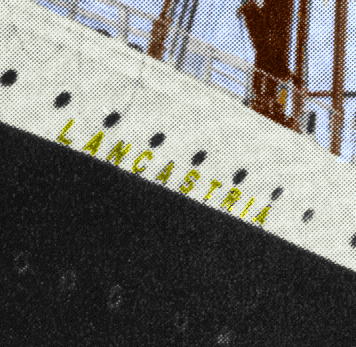
The building of the Tyrrhenia and Cameronia represented the first major merchant order for Beardmore, although the yard did have a modest record in passenger liner construction. Only two years after the Tyrrhenia was launched the vessel was renamed, reportedly because American passengers had difficulty pronouncing the vessel's name. Many sailors believe it is bad luck to change the name of a ship after it has been launched. Even Tyrrhenia's sister ship, the Cameronia, was later renamed The Empire Clyde. There are no records of a formal renaming ceremony and the only reference to it came in the Editor's Diary of "Syren and Shipping" on the 27th of February 1924 when the following discreet announcement was made:
"... and that the designation of the Tyrrhenia, whose name has proved a stumbling block to so many people, has been changed to Lancastria."
These two orders and the others, which followed in quick succession firmly, established Beardmore in the shipbuilding industry. But it was not only in shipbuilding that he made his name. Apart from submarines, liners and warships the company were also responsible for manufacturing heavy armaments, such as tanks and field guns, steam locomotives, aircraft and airships, the largest of which, the R36 was almost 700 feet long and could carry more than 50 people.
The first true aircraft carrier ever built, HMS Argus, was constructed at Beardmore's Dalmuir Yard. This ship began life at Dalmuir in 1914 as the Italian liner Conte Rosso but when hostilities broke out in August 1914 all work on the liner ceased. Work began redesigning the vessel to become the world's first completely flush-decked aircraft carrier. The final conversion bore no resemblance to the design that had been intended for the cruise liner and one writer said of the Argus:
"The general appearance of the vessel was somewhat grotesque, rather in the nature of a furniture removal van, sharpened at the fore end."
After the war ended the Italian buyers of the Conte Rosso placed a second order at Dalmuir and the yard delivered to them the finished liner in March 1922. The 18,000-ton vessel was later sunk off Syracuse by a British submarine on the 24th of May 1941 with the loss of 800 lives.
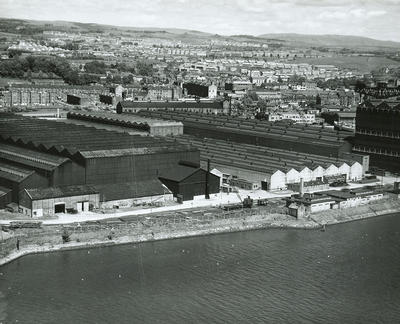
William Beardmore typified many shipbuilders of his time. The legacy of the Dalmuir Yard of William Beardmore is still felt 70 years after the company closed the shipyard.
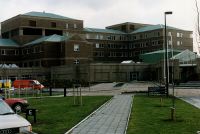
The birthplace of the Lancastria today bears no resemblance to what it once was, a bustling, industrialised workplace employing more than 4000 men and which was the economic lifeblood of Clydebank. The fitting out dock has now been filled in and the construction slips have been replaced by a state-of-the-art private hospital and next to it a hotel, "The Beardmore".
The Dalmuir Yard during the early 1920s was hit by a series of protracted strike action by workers, as were most of the yards up and down the River Clyde during that period. Employers sought to lower wages by the removal of special wartime and post war bonuses. The average shipyard wage per week at the time was £4. On December the 1st the joiners came out on strike over the proposed removal of bonuses of twelve shillings a week. Four thousand men took part in the action which went on for some nine months and eventually fell in favour of the employers.
Within a year a further nine shillings per week was removed from the men's wages. The men returned to work on the 26th of August 1921 but the delay had affected all construction considerably.
The Cameronia was sailed to Cherbourg in order that her joinery work could be completed and she was not ready for service until March 1921. Sporadic industrial action continued with engineers and the main shipbuilding unions all coming out on strike over the removal of overtime payments and post-war bonuses.
This delay all resulted in the Tyrrhenia taking much longer to build than had been planned. Eventually she was ready and launched on the 31st of May 1920. The launch party included the Marquis of Graham, who was one of the main financial backers behind Beardmore and also a Director on the company's Board. Newsreel footage of the launching ceremony has sadly decomposed, although there are a few still photographs which remain.
Lord Invernairn was present and his wife, Lady Invernairn, was given the honour to launch the vessel. Up to that point Tyrrhenia had only been known by her yard name, No. 557.
After her launch, tugs towed the liner to the fitting-out basin. She had completed her sea trials by 12th June 1922 and on the 13th of June began her maiden voyage from Glasgow to Quebec and then onwards to Montreal.
|