|
Lancastria’s cruising days
After her maiden voyage Tyrrhenia crossed the Atlantic twice on the Liverpool to Boston route on the 15th of September and again on the 28th of October 1922. From November through to the end of January 1923 she sailed the regular Liverpool to New York route before beginning the Hamburg to New York sailing.
Her last sailing from Hamburg arrived in New York on the 19th of November 1923. By early 1924 Cunard made the decision to change Tyrrhenia's name and the vessel left Liverpool on route for New York on the 5th of February 1924. After the return voyage the Tyrrhenia name would never sail again and the vessel was given the new name, RMS Lancastria. Cunard had identified the growing role in the market place for Ocean-going cruising and Lancastria was given a full refit to accommodate this new role.
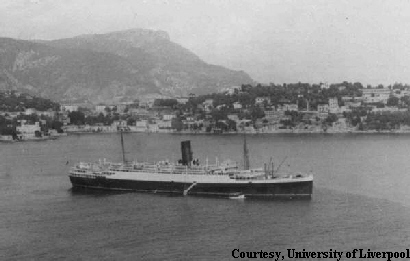
Lancastria at Villefranches - 1930s
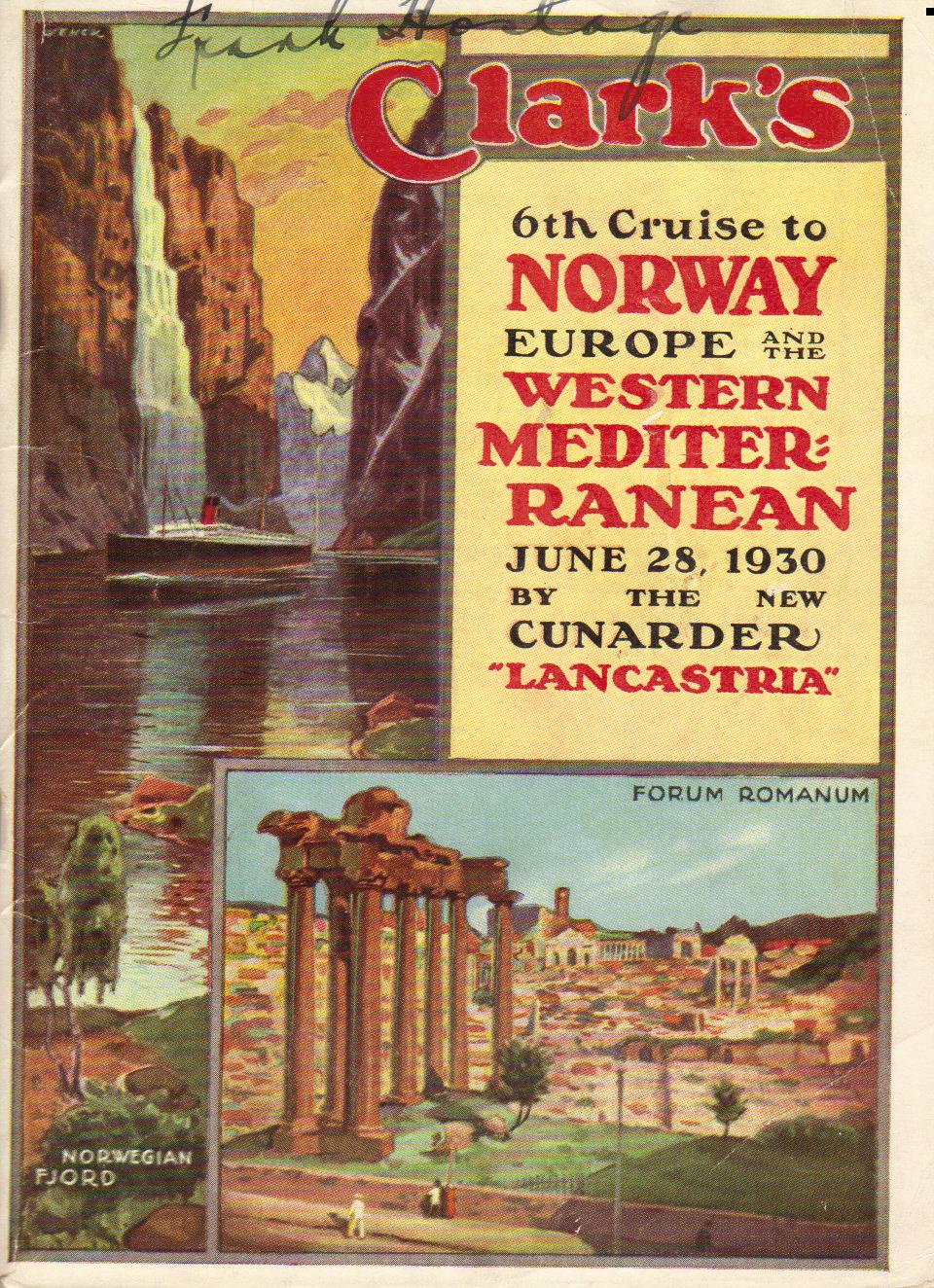
From 1924 to 1930 Lancastria crossed the Atlantic Ocean more than 55 times. During the thirties she sailed numerous and varied routes to the Mediterranean and the Bahamas. In 1934 it cost £125 to sail First Class from Liverpool to the West Indies. A year later Cunard were advertising a 22-day cruise to Gibraltar, Tangier, Villefranche, and Lisbon for 22 guineas. Sir Charles Baring, Cunard's Assistant Cruise Director travelled regularly on Lancastria.
"The Lancastria was essentially a North country ship and sailed out of Liverpool and many of the first passengers I had to look after were on holiday from the cotton mills and used to arrive on deck in their clogs." - Sir Charles Baring, Extract from the "The Cunard Story".
In 1936 Lancastria set sail for Galipoli as part of a pilgrimage organised by many of the men who took part in that bloody campaign during World War One. These specialised cruises were typical during the late 1930's as the demand from transatlantic travel began to drop. During her Mediterranean trips she had her entire hull repainted white in line with her new cruising role.
In 1936 Cunard arranged for Lancastria to sail to Dublin for a special cruise taking the largest contingent of pilgrims from Ireland to Rome. Among them was Ireland's former Leader, William T. Cosgrave. At that time Lancastria was the biggest vessel to dock in Dublin. British Movietone News covered the story in a newsreel and showed several close-ups shots of Lancastria both aboard and from the quayside.
On the 22nd of October 1936 on her way back to her homeport of Liverpool, Lancastria ran aground in bad weather off Egremont Pier. Stranded high up on a ledge, her propellers and rudder clearly visible, she had to wait for high tide before tugs assisted her and pulled her clear. Again British Movietone News were present to record the drama.
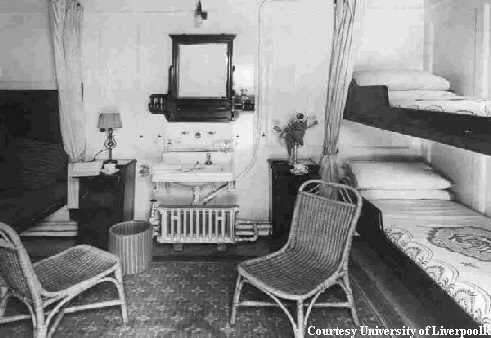 |
A typical Lancastria berth
Her final peacetime cruise came in September 1939 when she sailed to the Bahamas. After that voyage she was sent to New York to await orders. The world was now at war. In late March 1940 the British Government notified Cunard that the liner was to be requisitioned for national service as a troop transport. On April the 13th the Authorities were notified that the ship was at their disposal. Lancastria's hull had already been painted battleship grey whilst in New York and in preparation for entering the war. One, 4" gun mounting was placed on her aft-deck, next to the swimming pool to deter submarine and air attacks. Her days of peacefully cruising the high seas had come to an end.
|