|
LANCASTRIA’S 1936 VOYAGE TO GALLIPOLI
On the 1st of May 1936 Lancastria left Liverpool on a unique pilgrimage to the Dardanelles carrying over 400 veterans of the Gallipoli campaign. The veterans were accompanied with their wives for the 22-day voyage that took them through the Mediterranean. In only a few short years the world would be rocked by the start of World War 2 where Lancastria would become a troopship.
Over 21,000 British troops were killed in action during the Battle of Gallipoli, with an estimated 100,000 dead on all sides. When this pilgrimage took place none of the veterans who were on the Lancastria had been back to Gallipoli since the Battle, 21 years before.
In a photographic collection provided to the Lancastria Association by Rob Stepney we now glimpse a view of Lancastria which has not been seen since the late 1930s. Whilst the photographs were taken on a solemn pilgrimage to remember the fallen of that disastrous campaign, you get a real sense of life in some of the places visited along the way, before the “modern era” set in and before WW2 erupted. It gives a very good indication of what life was like aboard Lancastria for the “privileged few” and the internal images of Lancastria are a unique record of what the vessel was like inside.
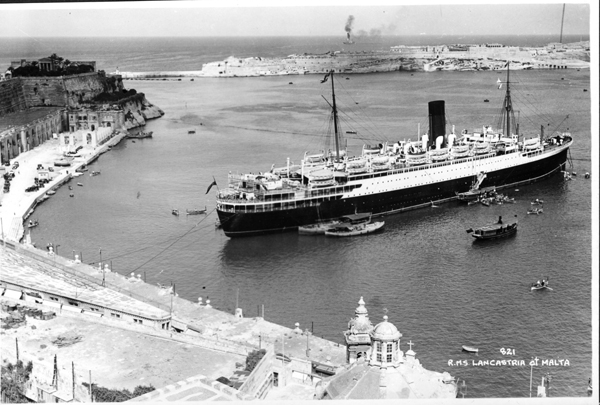
The first image is taken at Malta and is an elevated image of the Lancastria, a perspective not normally seen in other images of the liner. You can see a flotilla of small vessels alongside taking passengers to the harbour.
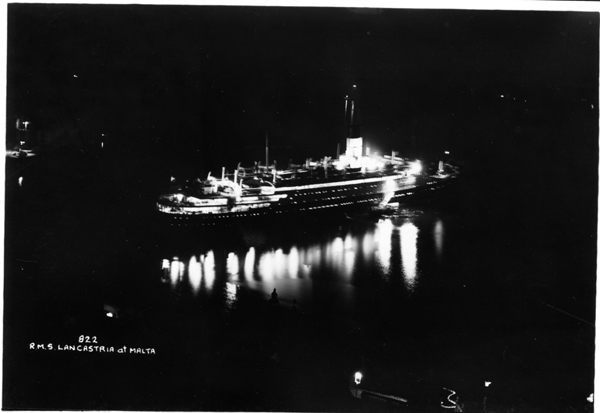
The next image is taken from the same vantage point but at night and shows the Lancastria lit up with deck lights. This is the only known photograph taken of Lancastria in darkness (there is a picture of her taken at 3.00am during the 1930s off the coast of Norway during the summer, but given the northern latitude it is still daylight !)
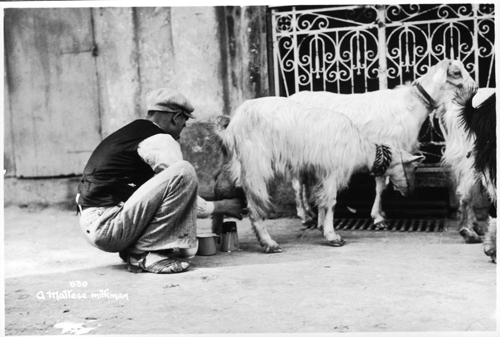
The tour’s official photographer also managed to catch some remarkable images of ordinary life. Here a goat herder milks one of his flock in the street, seemingly oblivious to the cameraman.
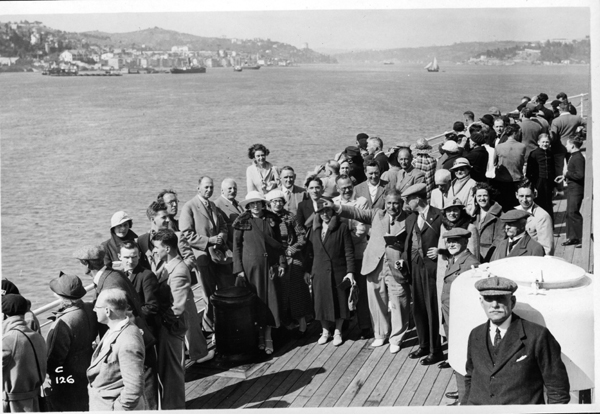
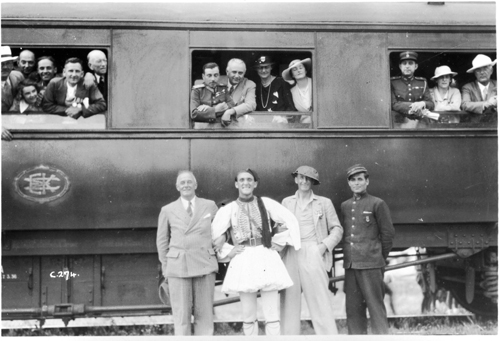
The image below shows a group of passengers from the same 1936 trip approaching what is thought to be Salonica in Greece.
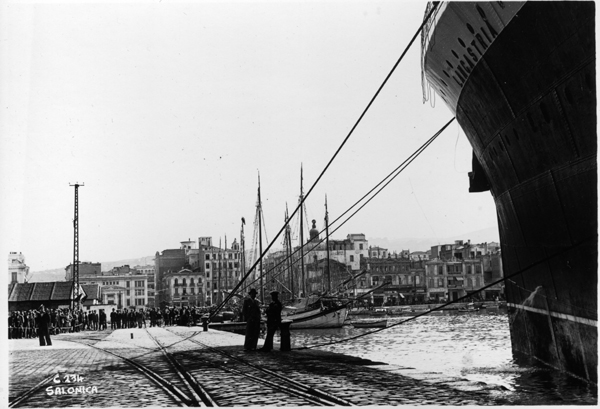
This photograph below shows Lancastria tied up at the dockside at Salonica with a remarkable profile of her bow. It is clear, from the crowds which have gathered, that Lancastria visit was an unusual occurrence for local people.
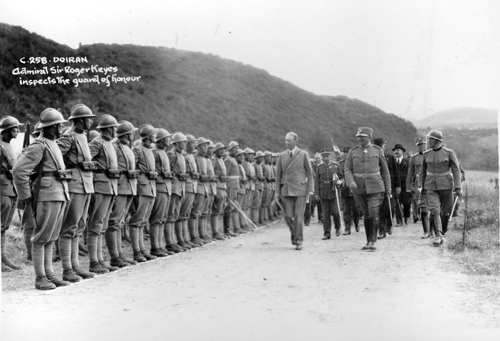
Admiral Keys inspects a Greek Guard of Honour.
Other passengers explore further inland in Greece.
 |
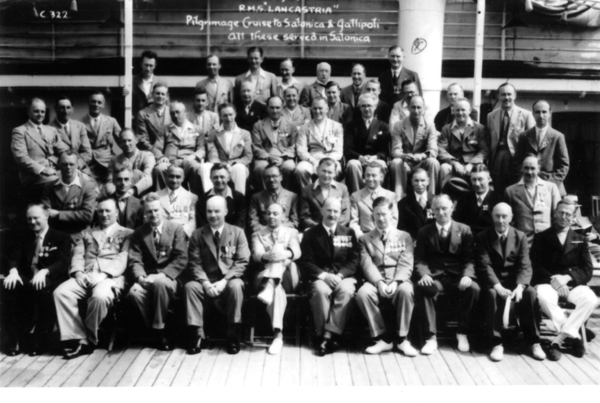
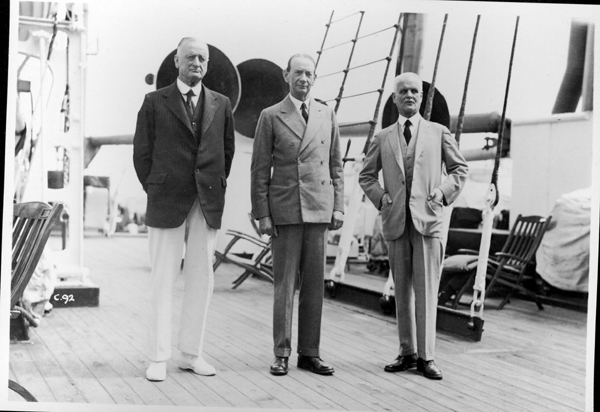
The next image shows some of the senior military veterans who took part in the pilgrimage. They are standing on the starboard boat deck. To their right, but out of shot, is Lancastria’s funnel. It was near this spot, on 17th June 1940 that one of the fateful bombs that sank the Lancastria struck the ship. Royal Engineers from 663 Artisan Works Company were also stationed on this part of the deck that day and given orders to shoot on command in the event of a rush on the lifeboats. That command was never made as Lancastria sank too rapidly and most of the lifeboats weren’t launched at all. From left to right are: Lord Birdwood, (1865-1951) British Field Marshall, was the first commander of the Australian and New Zealand Army Corps (ANZACS) at Gallipoli; Admiral Sir Roger J.B. Keyes R.N. (1872-1945) Chief of Staff to the commander of the Gallipoli campaign; and Captain Edward Unwin V.C. R.N. (1864-1951) Unwin commanded the River Clyde at the 'V' Beach landing, 25th April 1915.
 |
The next image shows a group of Gallipoli veterans near the stern of Lancastria.
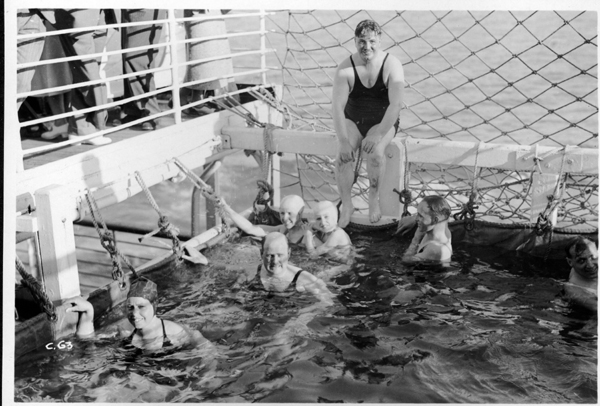
The next image is of passengers relaxing during the 22 day voyage. This one shows the ship’s canvass pool. There was little difference between the swimwear for men and women during this era.
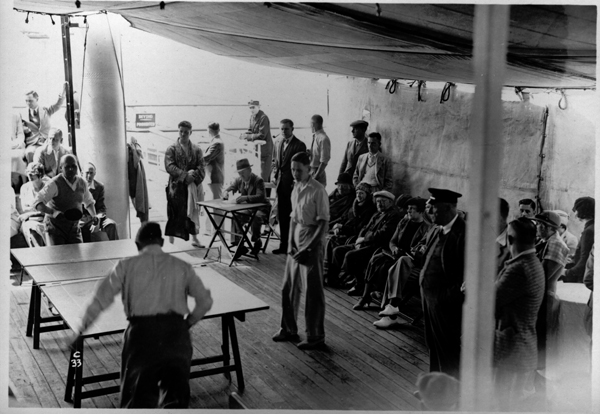
The image below shows passengers playing table tennis. In the background is the pool with a sign “Diving prohibited”.
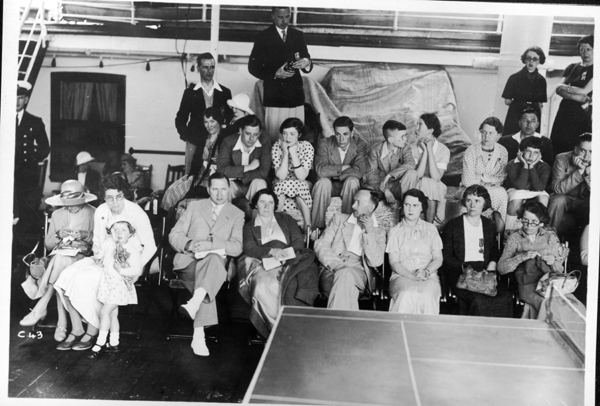
There was no television or much other modern-day entertainment during the voyage and so sporting activity was the main distraction. All the same many of the passengers in this photograph, below, look decidedly bored.
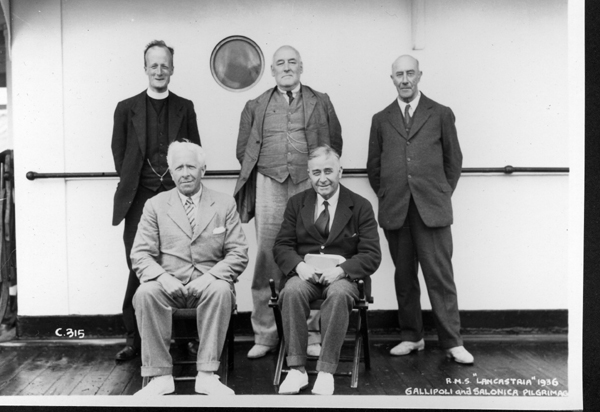
The next image is of a group of five pilgrims, including a church Minister, on the promenade deck.
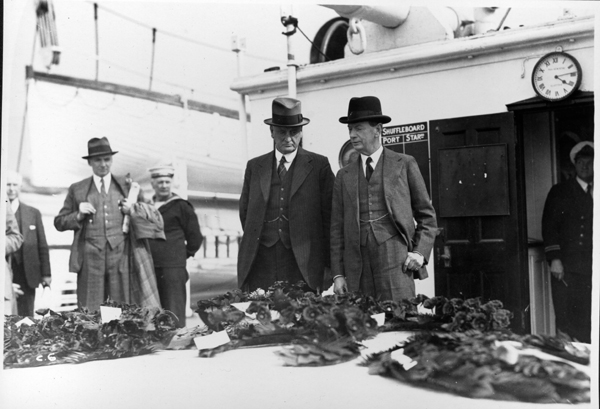
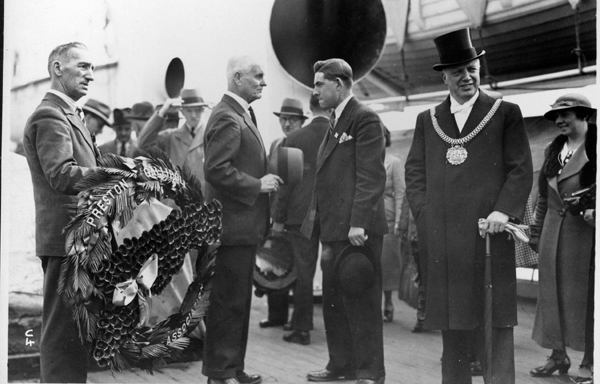
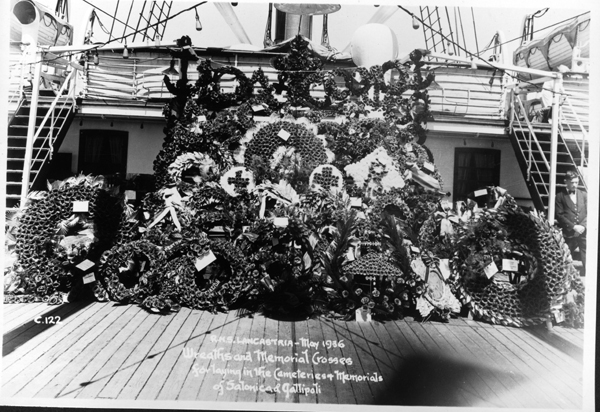
Lord Birdwood and Admiral Keys inspect the memorial wreaths as the Lancastria gets closer to its destination.
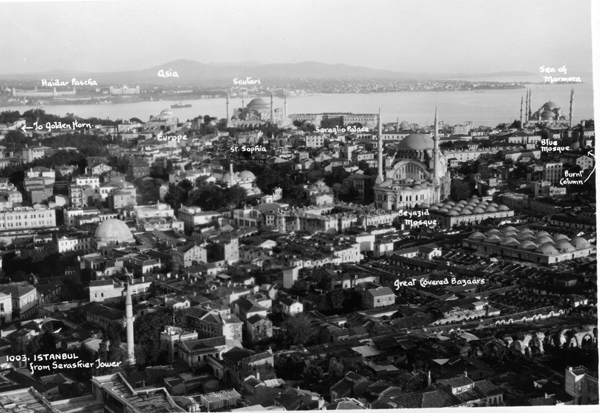
At Istanbul they have one more stop. This remarkable elevated photograph shows this ancient city.
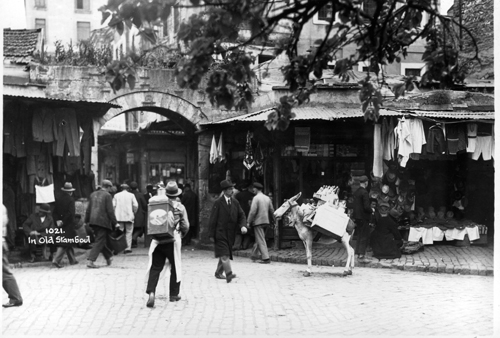
Once again the cameraman manages to take a series of images of “old Istanbul” with locals seemingly unaware they are being photographed.
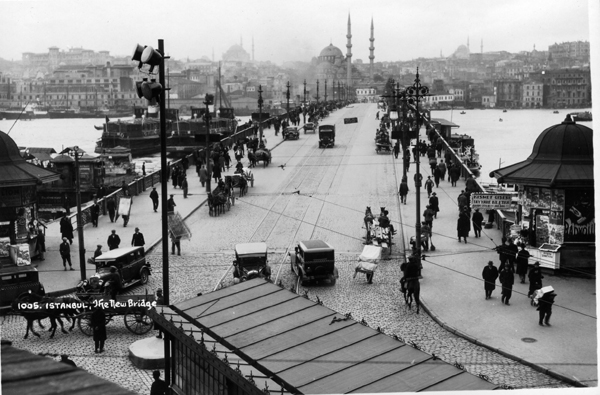
The new bridge in Istanbul shows this historic ancient city was a thrive of activity and must have seemed a million miles from home for most of the pilgrims.
As they neared the Dardanelles more preparations were made for the wreaths they were carrying.
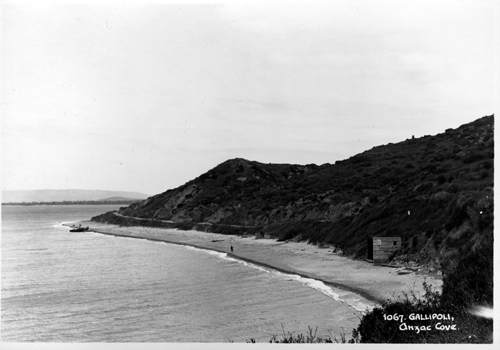
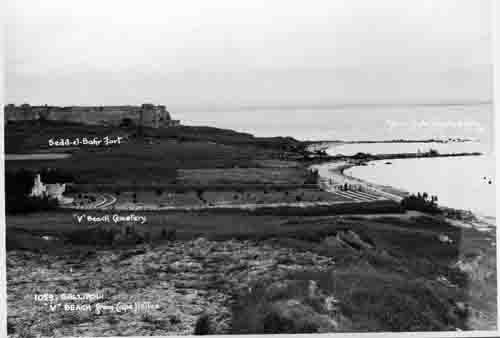
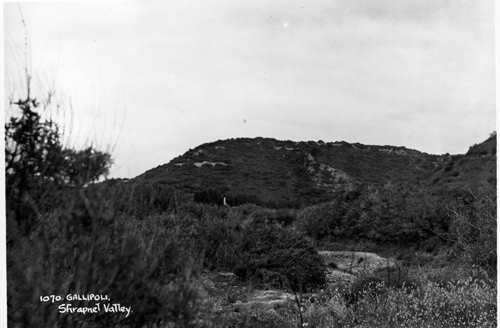
The next set of images show key sites where the battle raged.
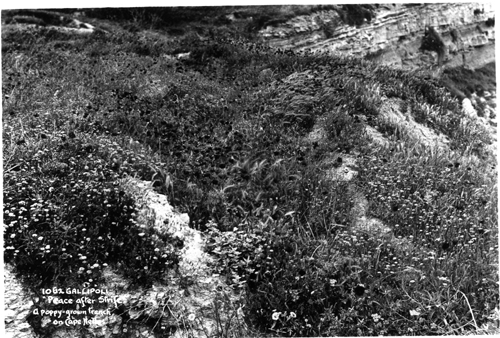
Poppy filled trench below and above “V” beach, 1936
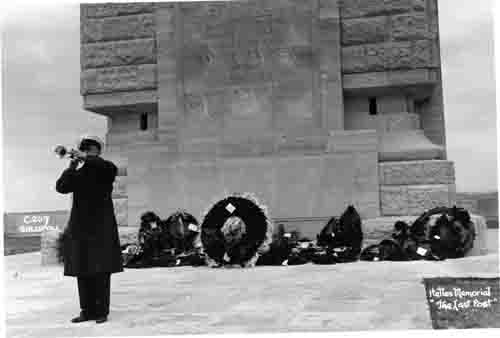
A bugler plays Last Post at the memorial erected to the victims. In a journal written by an accompanying journalist, he wrote to complain about heavy handed Turkish policemen who would not allow the pilgrims to explore various sites on the battlefield, insisting they limit their exploration to the war cemeteries. Most did however explore the site where many of their friends had fallen, in what was ultimately a humiliating and bloody defeat for British and Commonwealth troops.
 |
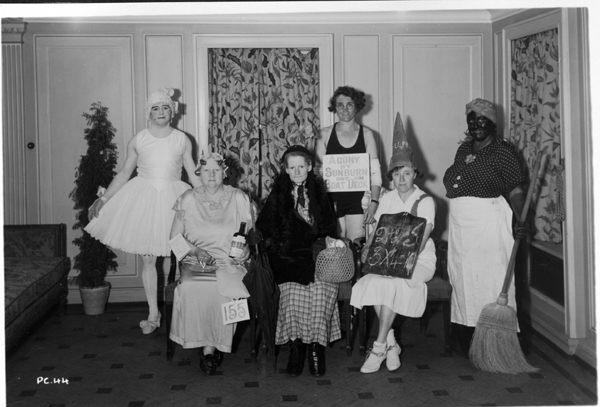
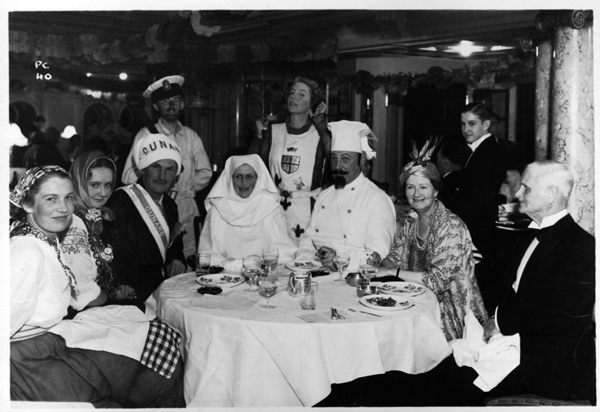
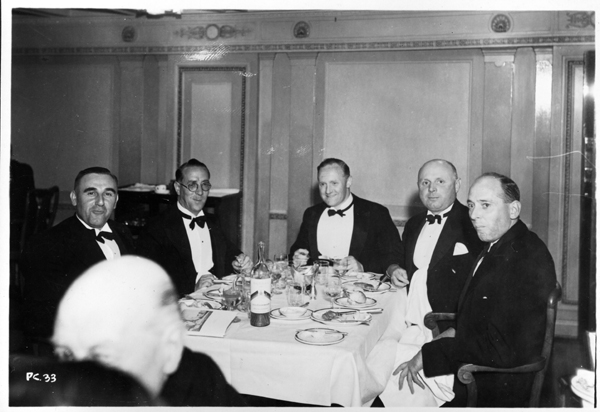
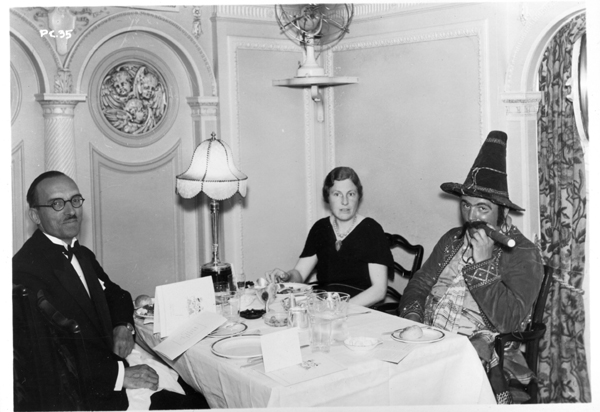
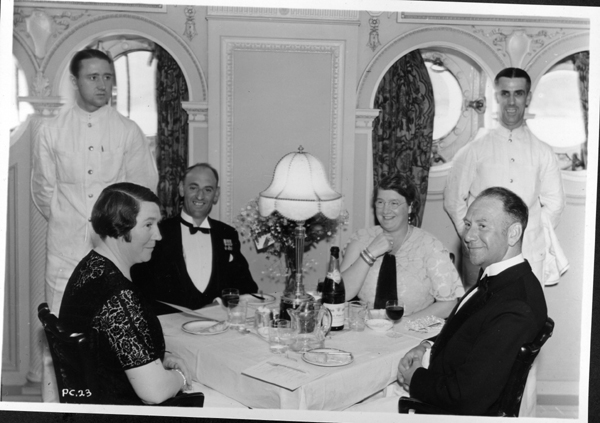
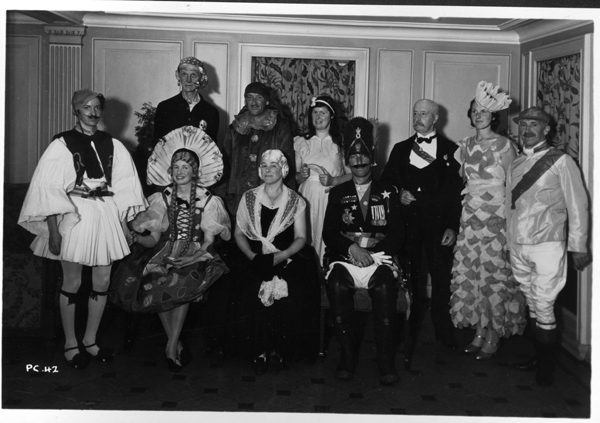
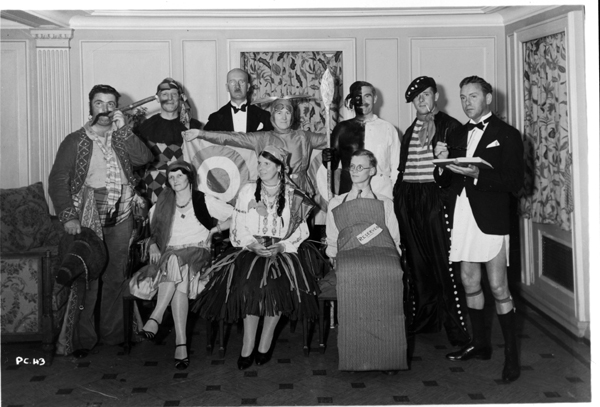
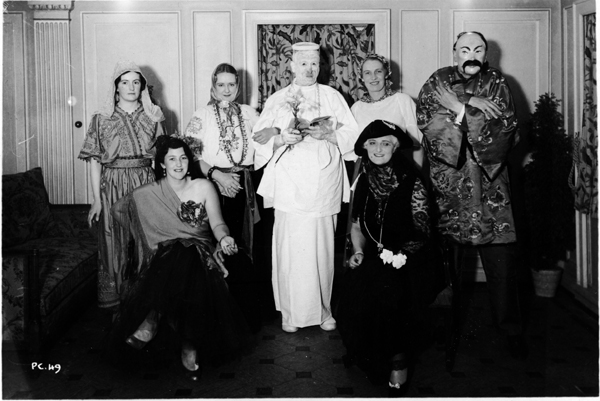
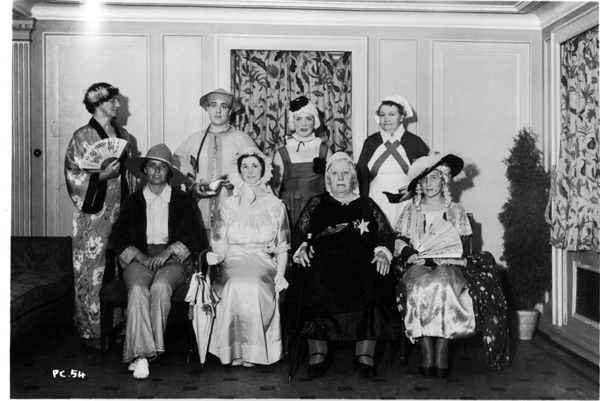
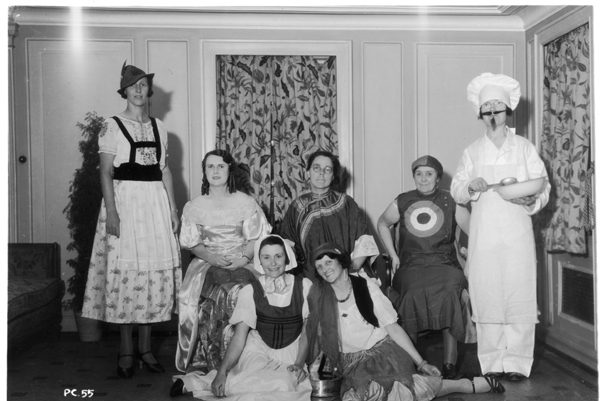
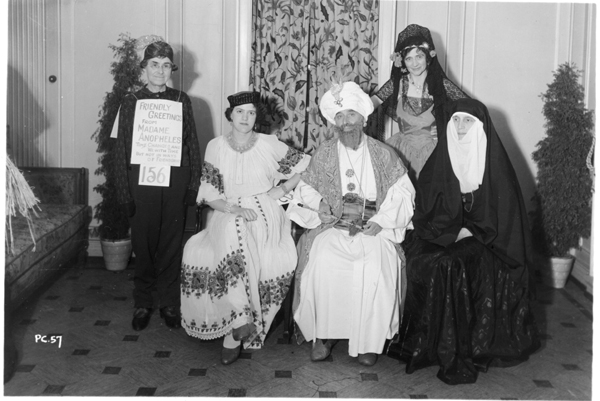
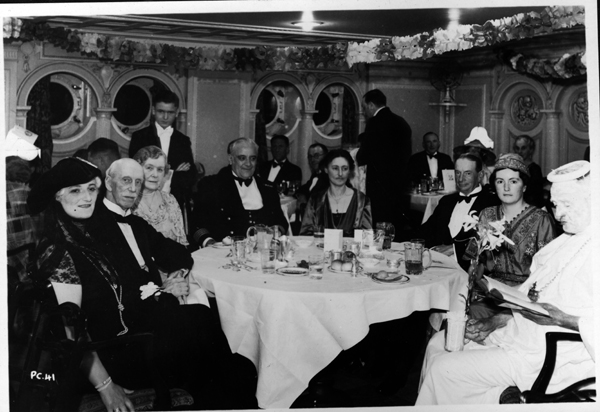
After the pilgrimage passengers settled down for the long voyage back to the UK. Fancy dress parties in the evening helped pass the time. In this remarkable set of photographs, apparently taken over a few evenings, are a series of shots inside the Lancastria’s 1st class dinning saloon. The first image below shows one elderely passenger dressed up as a shipwrecked passenger, wearing one of Lancastria’s “Board of Trade” lifejackets. These were in limited supply on 17th June 1940 as the liner was heavily overloaded. Many of those men who were lucky enough to secure one that tragic day were not instructed on how to hold them as they jumped into the sea and subsequently broke their necks as they entered the water. Wearers of it were meant to hold the neckline of the lifejacket down firmly with both hands.
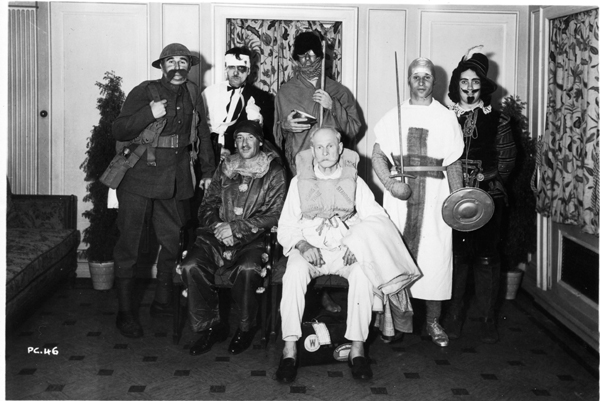
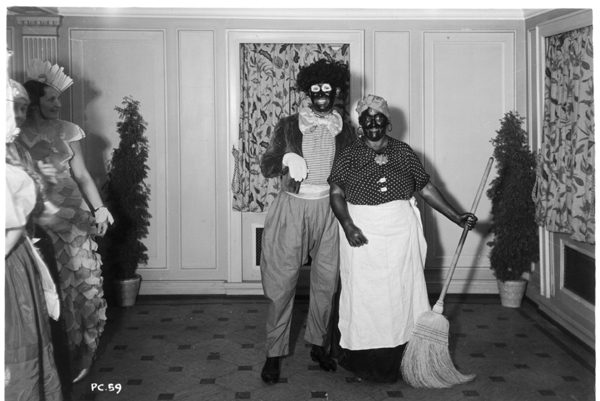
Some of the images would not be deemed politically correct for today’s audiences and reflect a time over which the sun has well and truly set.
Some outfits were very imaginative, other simply bizarre!
The couple below would not be deemed “acceptable” a fancy dress parties today!
|